
BEIJING, Dec. 13 (Xinhua) -- The scars left by Unit 731, Japan's World War II germ-warfare unit, have never fully faded. Decades later, the search for truth continues -- for clarity, memory and reflection.
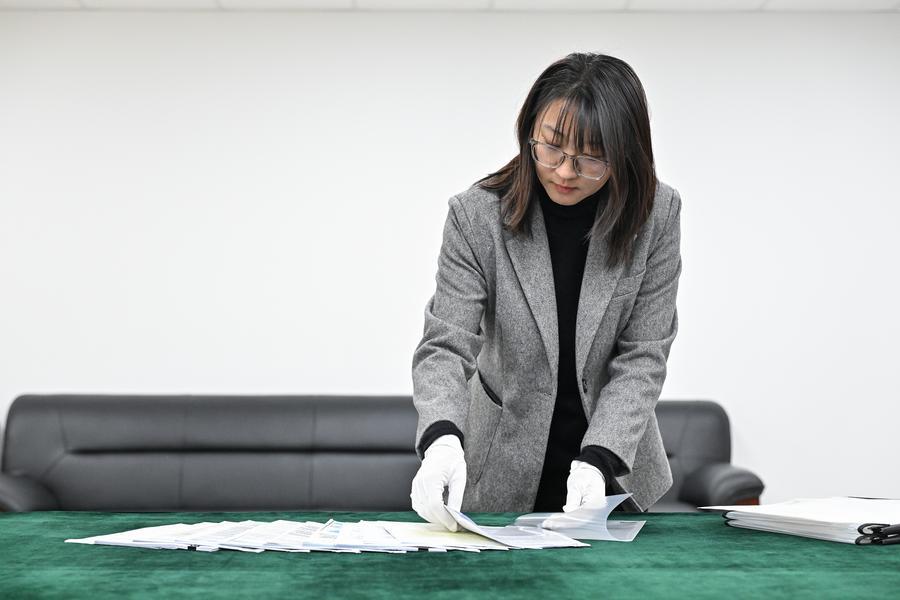
That search has recently yielded new developments. On Saturday, China's Central Archives said China has received a batch of Russian-provided evidence related to Unit 731's wartime atrocities.
The archive copies from Russia include trial records of Unit 731 members, investigation reports on the unit's crimes, and internal official correspondence of Soviet authorities, covering the period running from May 11, 1939 to Dec. 25, 1950.
During World War II, the Japanese invading forces established a biological warfare network across multiple Asian countries, with Unit 731 located in Harbin, northeast China's Heilongjiang Province, serving as a top-secret base for biological weapons and human experiments.
At least 3,000 people from China, the Soviet Union and other countries and regions were used in human experiments conducted by Unit 731.
According to China's Central Archives, the archives provided by Russia reveal the Soviet investigation process during the early stage of the Khabarovsk War Crimes Trials in 1949, identifying more than 200 individuals linked to the crimes of Unit 731, and ultimately singling out 12 war criminals for public trials.
These individuals confessed to violating international conventions and to preparing and carrying out biological warfare.
Experts believe that these archives provide concrete historical evidence of Japan's biological warfare crimes in China, further confirming that Japan's biological warfare was a top-down, state-organized war crime and offering irrefutable proof for restoring historical truth.
Many of these materials contain information previously unknown to us, serving to complement and corroborate the contents of our existing archival collections, said Zhou Zhenfan, an official with the archive preservation department of China's Central Archives.
The defendants brought to trial included senior, mid-level and junior Japanese military personnel, according to the archives from Russia, which also contain medical assessment records kept by academicians and experts in fields including medicine, microbiology and parasitology.
These archival materials form an interconnected, comprehensive chain of evidence that "leaves no room for dispute," Zhou stressed.
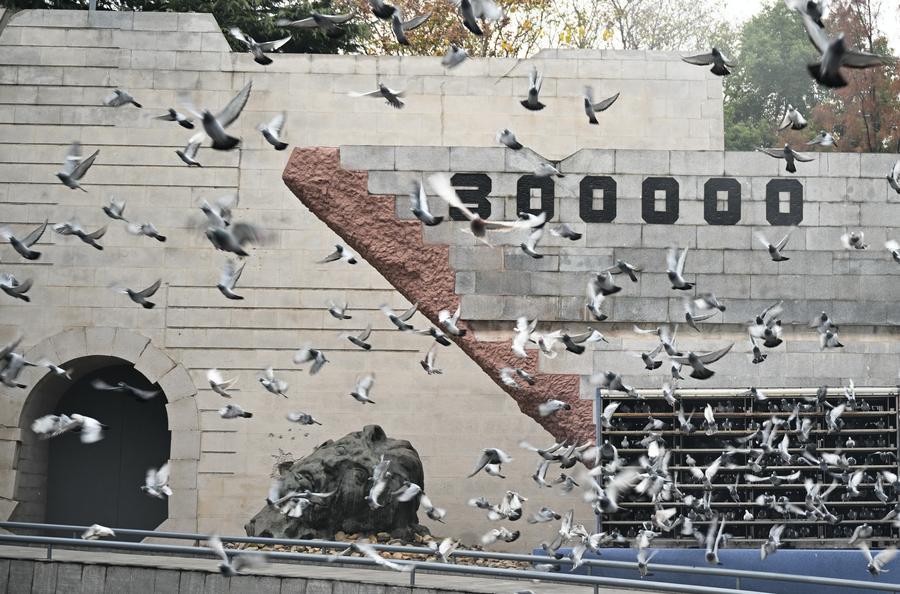
The Central Archives' announcement was made on China's national memorial day for the victims of the Nanjing Massacre, which took place when Japanese troops captured the then-Chinese capital on Dec. 13, 1937.
The invaders brutally killed about 300,000 people during the six-week massacre in one of the most barbaric episodes of World War II.
The national memorial day marked an important moment for the entire nation to reflect upon history, Zhou said. "The newly obtained evidence of Unit 731's crimes carries important educational value for both the Chinese people and the international community, highlighting the need to remember past atrocities, remain alert to the resurgence of right-wing militarism, and cherish peace."
On Saturday, people across China participated in various events commemorating the civilians and soldiers who lost their lives during the Chinese People's War of Resistance against Japanese Aggression. From 1931 to 1945, the war inflicted over 35 million casualties across China.
In Harbin, many made their way to the Exhibition Hall of Evidence of Crimes Committed by Unit 731, where archives, artifacts and other materials document the unit's wartime atrocities.
"I recognize every piece of equipment, understand the clinical manifestations of each bacterial strain, and know the limits of the human body. But when they are all brought together and displayed here, I feel overwhelming anger," read a message in the museum's guestbook.
The exhibition hall has seen a surge in popularity in recent years, drawing strong public interest. In 2024, the museum welcomed over 3 million visitors, and the total number of visitors in 2025 is expected to reach at least the same figure.
"Past experience, if not forgotten, is a guide for the future," said Hou Tao, a visitor from Jilin Province who stood in the display area for a long time with his mother. "We advocate peace, but we must never forget history," he said. ■