NANJING, Dec. 13 (Xinhua) -- In memorial halls in east China, park spaces in California and across social media, Iris Chang, whose best-selling book "Rape of Nanking" documented one of the most barbaric atrocities in the Second World War, was remembered on the memorial day that marked the Nanjing Massacre.
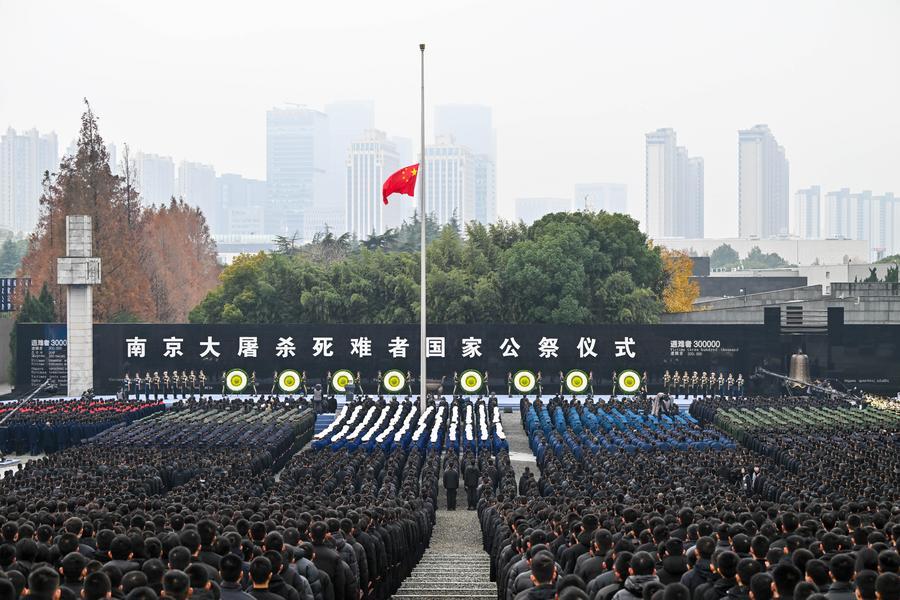
Saturday is China's 12th national memorial day for the victims of the Nanjing Massacre, which took place in the then Chinese capital on Dec. 13, 1937, when Japanese troops slaughtered 300,000 Chinese civilians and unarmed soldiers in just six weeks.
Chang, a Chinese-American journalist and historian, conveyed the horrors of Nanjing to a Western audience through "The Rape of Nanking: The Forgotten Holocaust of World War II," which was published in 1997. Nanking was the old Western name for the eastern Chinese city.
Chang's seminal work and spirit have been highlighted and honored this year as Japan's right-wing provocateurs attempt to break from the pacifism, moving farther down the path of military buildup. In early November, Japanese Prime Minister Sanae Takaichi said that the Chinese mainland's "use of force on Taiwan" could constitute a "survival-threatening situation" for Japan, implying the possibility of Japan launching an armed intervention in the Taiwan Strait. These remarks were almost a repeat of the extremely dangerous pretext that Japanese militarists employed 88 years ago when they initiated the macabre aggression.
"Takaichi's remarks have become much more outrageous than they were when Iris wrote the book. It's clear that the Japanese government wants to resurrect militarism, and probably wage another war on China, and that leaves us no choice but to be more vigilant," Iris's mother, Ying-Ying Chang, said in an interview with Xinhua.
"In 1997, Iris awakened the world with her pen of sorrow and indignation. Today, facing the clamor of the right wing, we must solidify memory with memorials, because forgetting means a second massacre," she said.
She was quoting holocaust survivor and Nobel laureate Elie Wiesel, who wrote in his memoir "Night": "To forget would be not only dangerous but offensive; to forget the dead would be akin to killing them a second time."
Iris Chang spent years interviewing survivors to record precisely what happened in Nanjing before succumbing to the crushing endeavor and taking her own life on Nov. 9, 2004. "Though I had heard so much about the Nanking massacre as a child, nothing prepared me for these pictures," she wrote. "In a single blinding moment I recognized the fragility of not just life but the human experience itself."
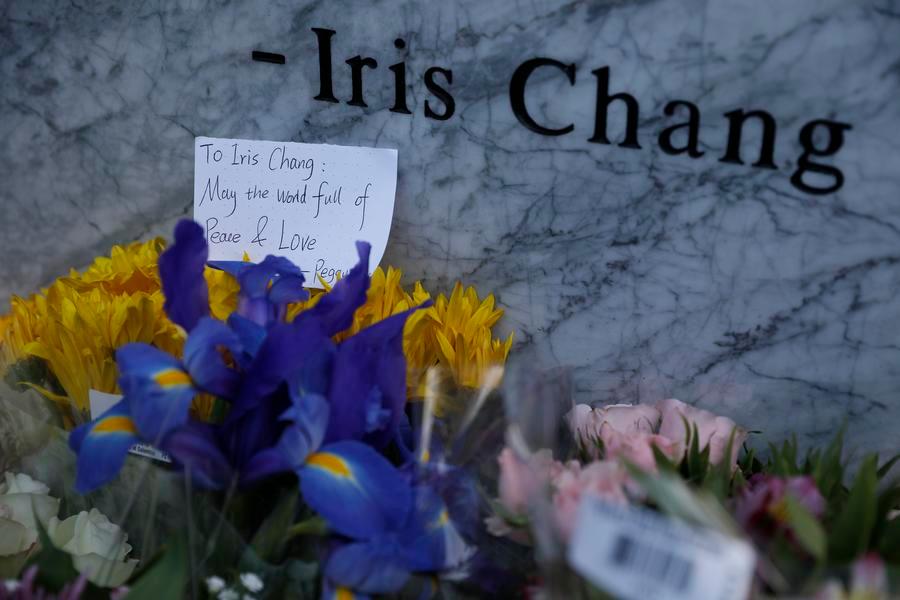
In San Jose, California, a public memorial will be held in a park that has been named after Iris Chang, her mother said. On Saturday, visitors at the Memorial Hall of the Victims in Nanjing Massacre by Japanese Invaders gathered to place flowers at a bronze statue of Chang.
Chang was born in Princeton, New Jersey, and grew up in Illinois. Huai'an city, about a two-hour drive from Nanjing, was her ancestral home. A memorial hall built in her honor in Huai'an admitted over 3,000 people every day, and over 1 million people have visited since it opened in 2017. At the entrance to the hall, a white marble bust of Chang is accompanied by the words, "Lest We Forget."
"She sought justice and never flinched under the threat of the Japanese right wing. To remember her is to guard the lonesome yet courageous figure, carrying on her spirit in seeking the truth despite how painful it is, and to remember the value of peace and justice," said He Rui, curator of the Iris Chang Memorial Hall.
On Saturday, the wails of sirens pierced through Nanjing, where Chang had once examined one of the most tragic chapters of World War II. Her videos and speeches have garnered millions of views and comments on Chinese social media, and her books have been reprinted in multiple editions and translated into over a dozen languages worldwide.
"She passed away, but her legacy lives on," said Liu Hui, who has worked at the Huai'an memorial for eight years. ■