
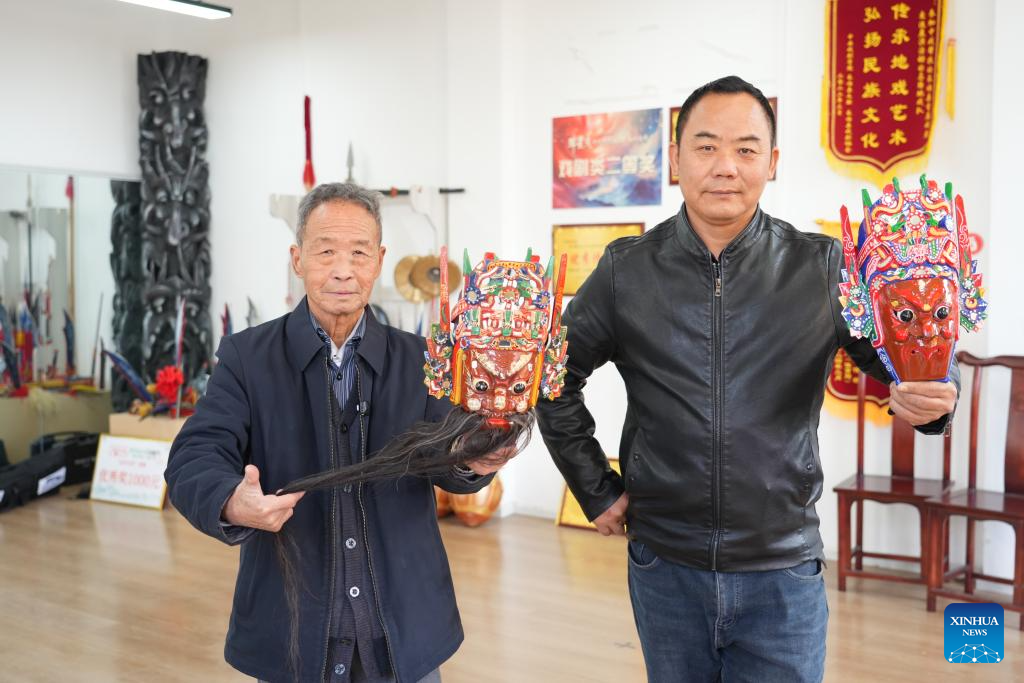
Fang Renliang (L) displays a lacquered wooden mask of Dixi opera in Malu Village of Qiannan Buyi and Miao Autonomous Prefecture in southwest China's Guizhou Province, Nov. 20, 2025. (Xinhua)
GUIYANG, Dec. 12 (Xinhua) -- For centuries, the world beyond the karst hills has fascinated the residents of Malu Village. But they don't need to travel to find adventure. Instead, they can don the lacquered wooden masks of Dixi opera, embodying legendary marshals or military advisors on ancient battlefields.
Though this deeply local folk opera is still unknown to many Chinese people, it is now finding foreign fans. Staged by farmer performers across terraced fields and village courtyards, Dixi opera has been hailed a "living fossil" of Chinese opera due to its rich legacy and vitality.
Fang Renliang, 81, is a performer whose lifelong passion for Dixi has helped preserve this 600-year-old art form. His dedication has also impressed an unlikely admirer of the opera, Garvin Hoefig from Germany.
Fang hails from Malu Village in the Qiannan Buyi and Miao Autonomous Prefecture of southwest China's Guizhou Province. Malu is the village that gave the local style of Dixi its name: Malu Tunpu Dixi.
The village has a history of anthropological significance as its residents are descendants of Ming Dynasty (1368-1644) soldiers who had relocated mainly from central China to garrison and farm in the remote region, and who later formed the fortified community of Tunpu.
Born from this distinct military culture, Dixi was originally performed by soldiers to boost morale. Its stories celebrate patriotic generals, with lyrics passed down through fixed, traditional scripts.
When the gongs crash and the drums sound, performers, wearing masks and costumes in vibrant colors, strike poses to the rhythm of ancient verses. And the people of Malu don't just perform or watch these operas -- they connect with their ancestors.
Masks, known as "faces" by the villagers, are key to performers' transformation. Fang once wore one such mask to embody legendary Tang Dynasty (618-907) general Xu Maogong. Over a lifetime, he has grown attached to these magical objects that have transformed him into larger-than-life characters.
After a recent performance, Fang carefully opened a worn camphor wood chest containing over 100 neatly arranged "faces" with a myriad of colors and expressions, their lacquer coating shimmering in the light.
Though performing has become physically demanding at 81, Fang's bond with Dixi is unbreakable. He now contributes as his troupe's drummer, his hands keeping the opera's timeless rhythm.
"Despite my age, I still want to be involved. Our goal is to help people understand our culture and to spread awareness of it," Fang said.
As a designated practitioner of this form of intangible heritage in Guizhou, Fang stands at a crucial intersection of past and future. Fortunately, others are now taking up the baton. Jin Tian, a 47-year-old self-taught villager performer, feels the weight of this responsibility keenly. "A 200-year-old mask was handed down to us," he said, "and we need to pass it on."
Jin's own journey of inspiration illustrates the deep source of Dixi's vitality, or perhaps that of any folk opera style. "Growing up, whenever I heard the gongs and drums in the village, I knew a performance was on," he said. "I'd grab a stool and sit in the crowds, watching, while dreaming of one day joining them."
Yet inheritance faces modern challenges. "With many young people leaving the village to seek jobs elsewhere, it's not easy to gather a full team," Jin admitted. Still, he and his troupe have continued recruiting and training new members.
Garvin Hoefig, who has made China his second home since 2012 and is now the CEO of BITZER Rotary Compressor (Jiangsu) Co., Ltd. in east China's Jiangsu Province, was first mesmerized by the masked performers in 2015. Later, due to his frequent visits to his wife's hometown of Changshun, he had the opportunity to gain a deeper understanding of the art form.
Having learned about its history and preservation efforts, Hoefig now sees Dixi opera as more than a spectacle, but an art that gives him "really emotional feeling to be part of it."
"We saw a performance from more than 600 years ago, with masks over 200 years old. It's a treasure," Hoefig said. "I could feel that it is from the soul."
Hoefig is now a keen advocate for Malu Tunpu Dixi and has taken friends from different countries to watch performances. His friends have been very impressed, especially by the entirely handmade "faces" which bestow buoyant personalities onto characters.
"I'm sure they want to see this old culture -- this is real China," Hoefig said with conviction. ■
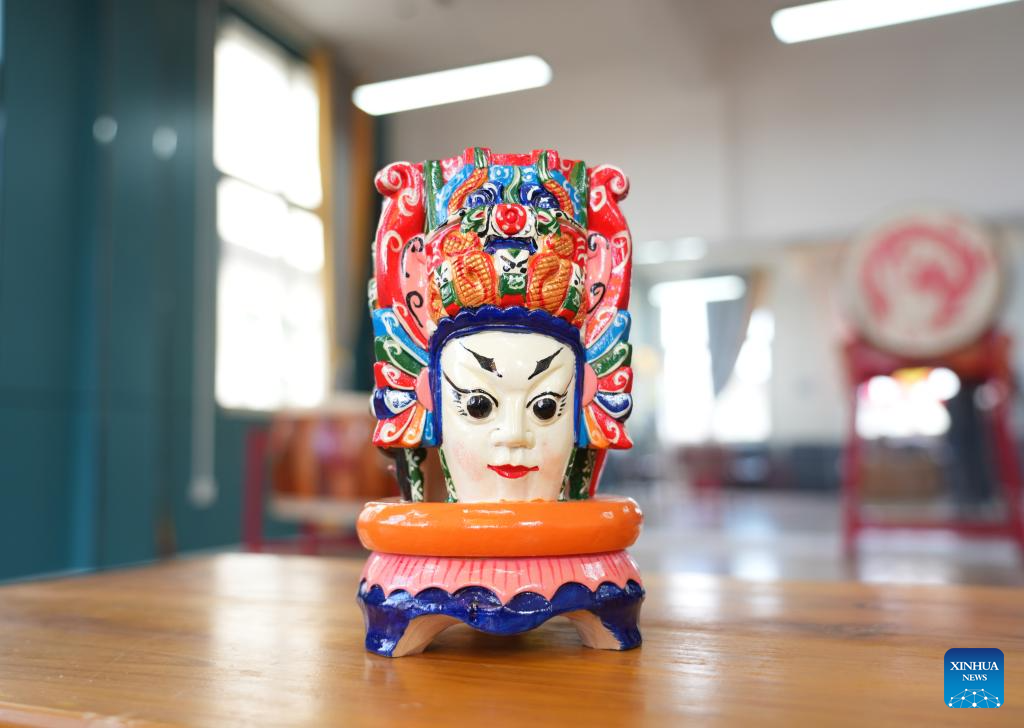
A lacquered wooden mask of Dixi opera is pictured in Malu Village of Qiannan Buyi and Miao Autonomous Prefecture in southwest China's Guizhou Province, Nov. 20, 2025. (Xinhua)
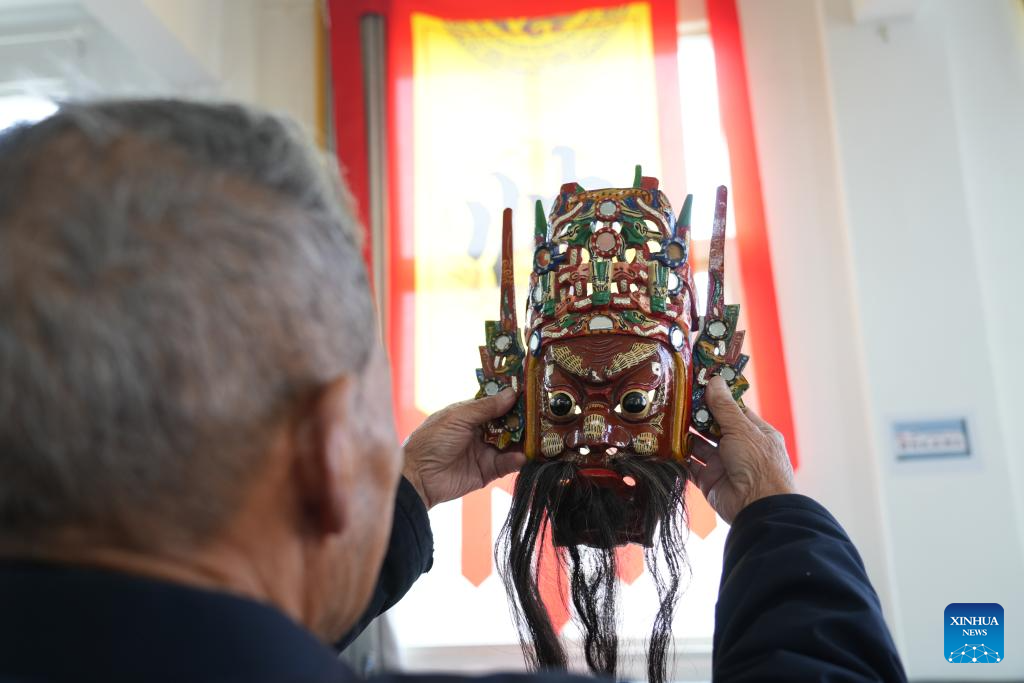
A villager checks a lacquered wooden mask of Dixi opera in Malu Village of Qiannan Buyi and Miao Autonomous Prefecture in southwest China's Guizhou Province, Nov. 20, 2025. (Xinhua)


