
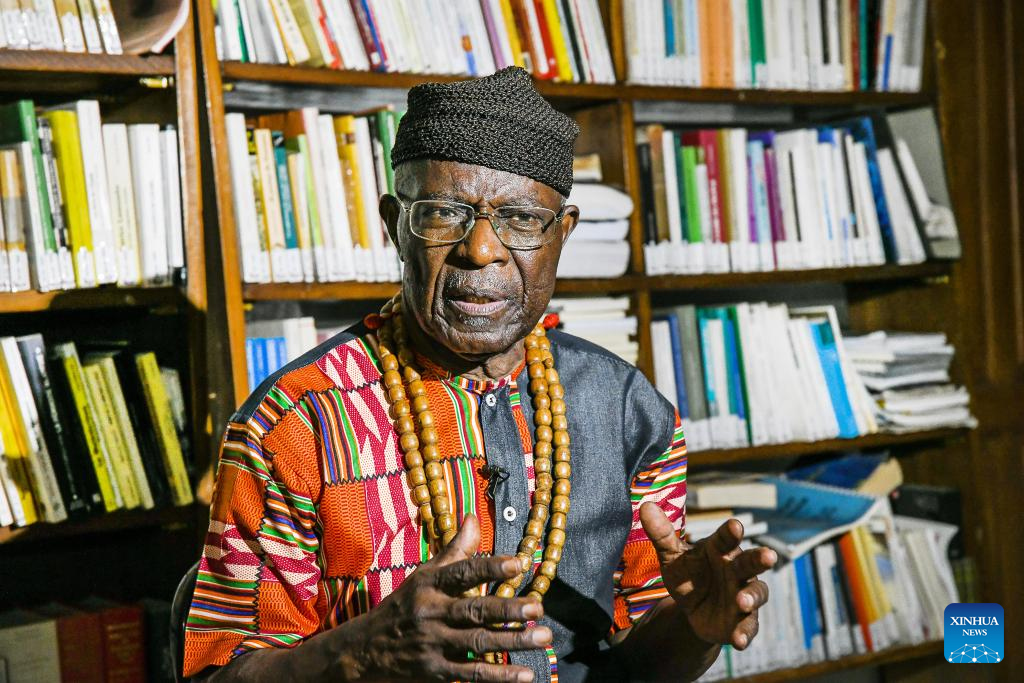
Alexandre Kum'a Ndumbe Ill, a Cameroonian prince, historian, and professor emeritus at several universities, introduces his books at his library in Douala, Cameroon, on March 17, 2025. (Xinhua/Kepseu)
by Arison Tamfu, Wang Ze
YAOUNDE, April 23 (Xinhua) -- "Let's crush the monster!" This rallying cry comes from a Cameroonian prince and also writer, who has made a defiant call not only to Africa but to all oppressed peoples across the globe.
"This is the exploitation of the damned. Not even being able to understand the cause of his suffering... The monster has invaded our forests, the monster has taken over our subsoil. I thought we were condemned to poverty. Now I know how rich our heritage is..." wrote Alexandre Kum'a Ndumbe Ill in his 1971 book titled Ecrasons le monstre or Let's crush the monster.
Ndumbe III -- a Cameroonian prince, historian, and professor emeritus at several universities -- grew emotional when speaking about the lasting harm transatlantic slavery and colonization have inflicted on Africa.
"They didn't just bring weapons to take the colonies, they did everything to destroy us mentally," he said.
Born in an esteemed royal family of the Bell, now known as Bonaberi, in the Cameroonian port city of Douala, Ndumbe III was reared on tales of the brutality of colonial rulers. His grandfather Kum'a Mbape Bell, also called Lock Priso Bell, was among the first traditional leaders who rose up against colonization in Cameroon.
"After slavery came colonization, and after colonization came neocolonialism, which continues to this day. So this destruction is not only economic destruction but also profound human destruction," said the 78-year-old.
Ndumbe III could have indulged in the privileges of princely life, but instead, he chose the path of a scholar and writer, wielding his pen as a weapon mightier than the sword to expose the evils of colonization and illuminate the rich culture and history of the African continent.
At just 15, Ndumbe III traveled to Germany to further his studies and later became a university lecturer in France, Germany, and Cameroon.
"What I learned at school was that Africa is underdeveloped, more or less inferior. I didn't understand because it also contradicted this phrase that kept coming up everywhere: Africa is the cradle of humanity. I asked myself, but how can we be the cradle of humanity, and we're the last?" he recalled.
A deep urge to explore African history took root in Ndumbe III early on. To date, he has published more than 80 books on Africa, covering topics such as heritage, the struggle for independence, development, culture, politics, and economics.
Ahead of World Book Day, which falls on Wednesday this year, Ndumbe III recounted his story to Xinhua in his office at AfricAvenir, a non-governmental organization which he founded in 1986 with the sole mission of promoting African Renaissance, endogenous development, international cooperation, and lasting peace.
The organization has been instrumental in demanding the restitution of African cultural artefacts.
"The so-called ethnographic museums in Europe, whether in Germany, France, or Belgium, were created at the beginning of colonization because all these things they took from here had to be put somewhere," he said.
Of particular interest to the organization is the Tangue, the royal prow of Lock Priso's canoe looted by the imperial army in 1884 and now held at the National Museum of Ethnology in Munich, Germany.
"There are barely 8,000 artefacts left in Cameroon, but when you go to Germany, there are 40,000 Cameroonian artefacts, which means that all our generations, we haven't even seen what our fathers and mothers had to build on an artistic and spiritual level," Ndumbe III said, stressing that the artefacts must be restituted.
One of Ndumbe III's most widely read works is titled "50 Years Later, When Will Your Independence Be?" In it, he emphasizes the urgent need for the African continent -- home to 1.5 billion people -- to pursue unity, self-determination, and shared prosperity.
"The struggle for independence in the 1960s failed, and we must acknowledge that," he said. "Now people want to be independent because let's face it."
The fact that African countries are ending security and defense cooperation deals with former colonial masters is a glaring example of the quest for "true" independence, he said. "Because people have understood that Africans have the means, they have the intelligence they need, they have wealth they can exploit, but the exploitation of this wealth is not for themselves."
As he wrote in his book, Africa must "crush the monster" and pursue true independence and self-driven development.
In 1971, Ndumbe III wrote a heartfelt letter to congratulate the Chinese people when China's lawful seat was restored in the United Nations. Even to this day, he vividly remembers the opening line of the letter: "Brother People, your victory will go down in history."
"We were very supportive of China when I was young. At the time, China was a bit like a model for third-world countries," he said, noting that Chinese modernization offers valuable lessons for Africa, which is also striving to modernize and be independent.
According to Ndumbe III, those Western-oriented approaches have not served post-independent Africa well, while China's path to peaceful development is particularly worthy of learning.
"China must be a partner, not a substitute for the former Western colonial powers. But that also depends on Africans; it is the Africans themselves who must establish solid structures for this partnership. If Africans continue to fragment, into small countries carved out by colonizers, it won't be possible to achieve a win-win situation, and this is where the question of true African unity arises," said Ndumbe III. ■
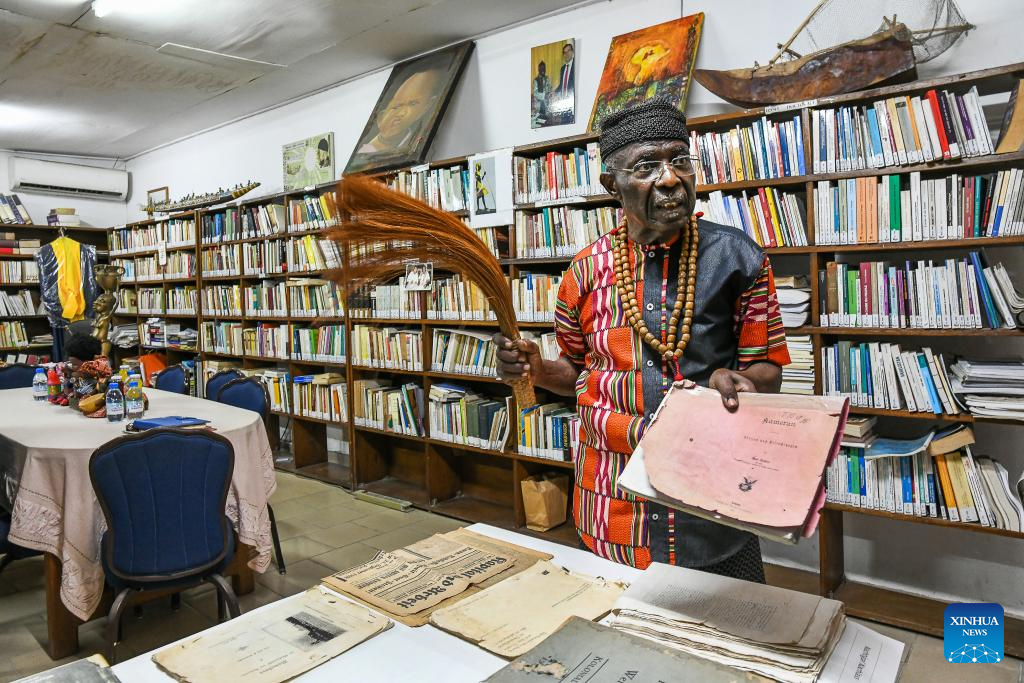
Alexandre Kum'a Ndumbe Ill, a Cameroonian prince, historian, and professor emeritus at several universities, presents archival documents on the history of Cameroon at his library in Douala, Cameroon, on March 17, 2025. (Xinhua/Kepseu)
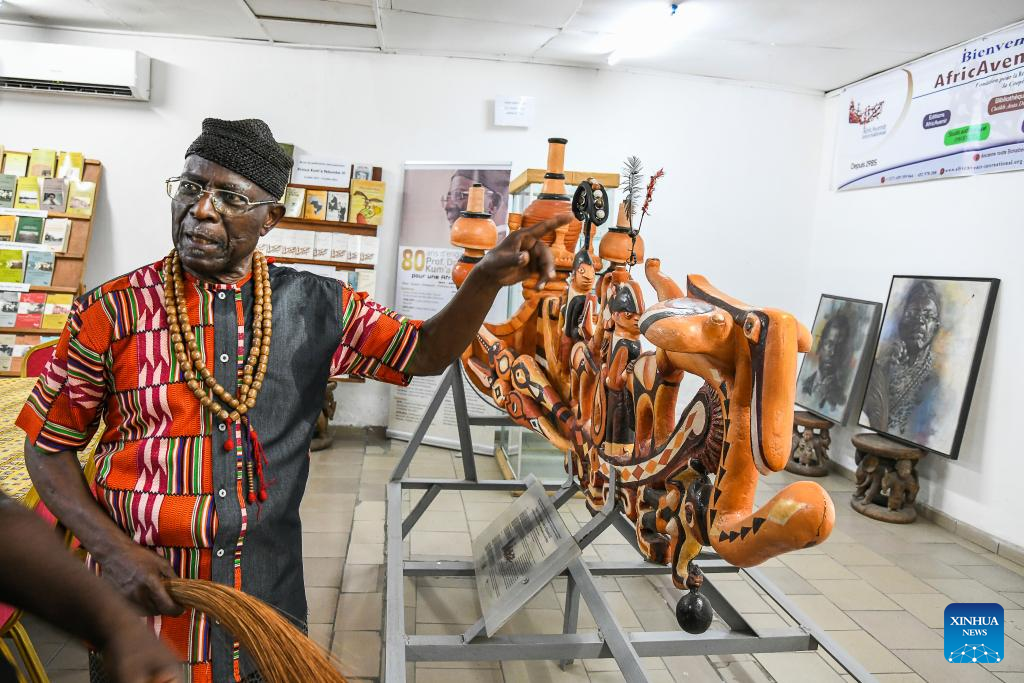
Alexandre Kum'a Ndumbe Ill, a Cameroonian prince, historian, and professor emeritus at several universities, presents traditional art objects at his office in Douala, Cameroon, on March 17, 2025. (Xinhua/Kepseu)
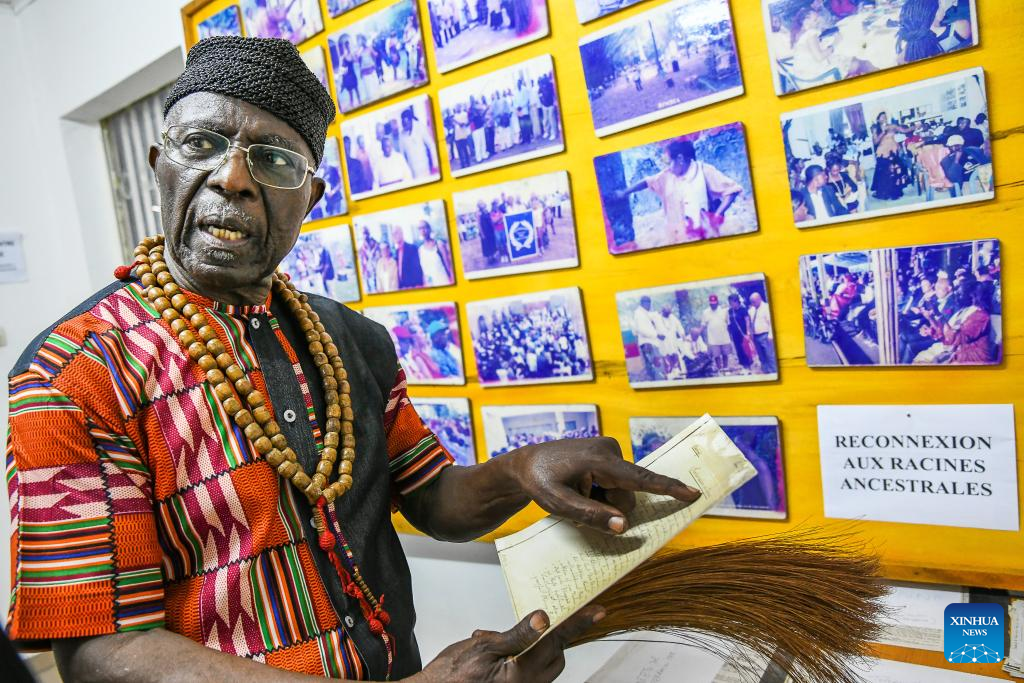
Alexandre Kum'a Ndumbe Ill, a Cameroonian prince, historian, and professor emeritus at several universities, presents an archival document on the history of Cameroon at his library in Douala, Cameroon, on March 17, 2025. (Xinhua/Kepseu)


